Roofing information for Gainesville & the South BayExplore service areas ↗

TORRANCE, CALIFORNIA • RESIDENTIAL & COMMERCIAL

Emergency Roofing in Gainesville, TX Near Me — Urgent Roof Leak Repair & Storm Damage

A leaking roof, damaged shingles, or an aging roofing system can leave you wondering what needs fixing and how much work is necessary. Sometimes the solution is a targeted repair. Other times, the roof needs a closer look before replacement becomes the sensible option.

Dry Home Roofing & Siding helps homeowners and property owners explore roofing services in Gainesville, TX, including roof repair, roof replacement, new roof installation, inspections, and storm-related roofing concerns.

From asphalt shingles and tile to metal and low-slope roofing systems, the goal is to understand the problem, evaluate the available options, and identify an appropriate next step.

BUILT FOR REAL ROOFING QUESTIONSRepair. Replace. Protect.
Roof RepairUnderstand your options
ReplacementCompare system choices
Roof InspectionsKnow what to check
Local Service AreasExplore nearby coverage
01 / 16

Roof Leaks or Damage? When to Look for Roofing Help Near Me

Roofing problems do not always begin with a major leak. A loose flashing detail, cracked pipe boot, lifted shingle, or blocked drain can allow moisture to enter slowly before visible damage appears inside.

You may notice a ceiling stain after heavy rain. A few shingles might be missing after strong winds. Your roof may look worn, but you may not know whether it needs repairs or a complete replacement.

These situations call for different solutions.

Signs Your Roof May Need Attention

  • Water stains on ceilings or walls: Moisture may be entering through roof coverings, flashing, or penetrations.
  • Missing or damaged shingles: Exposed areas may become vulnerable to rain and wind.
  • Cracked or displaced tiles: Broken tiles may leave the underlayment more exposed to weather.
  • Damaged flashing: Metal or other waterproofing details around joints and penetrations may no longer direct water correctly.
  • Repeated roof leaks: Returning moisture problems may indicate an unresolved defect or broader deterioration.
  • Sagging or visibly uneven areas: These may require prompt evaluation for possible structural or decking concerns.
  • Water collecting on low-slope roofs: Drainage restrictions or roof-system defects may need attention.
  • Loose roof edges or ridge components: Wind exposure can worsen existing weaknesses.

The visible symptom is not always the cause. Water can travel beneath roofing materials before appearing inside the building.

A sound roofing decision begins with identifying the likely source and evaluating the surrounding roof condition.

Questions About Roof Damage? Call +1 (855) 923-5342

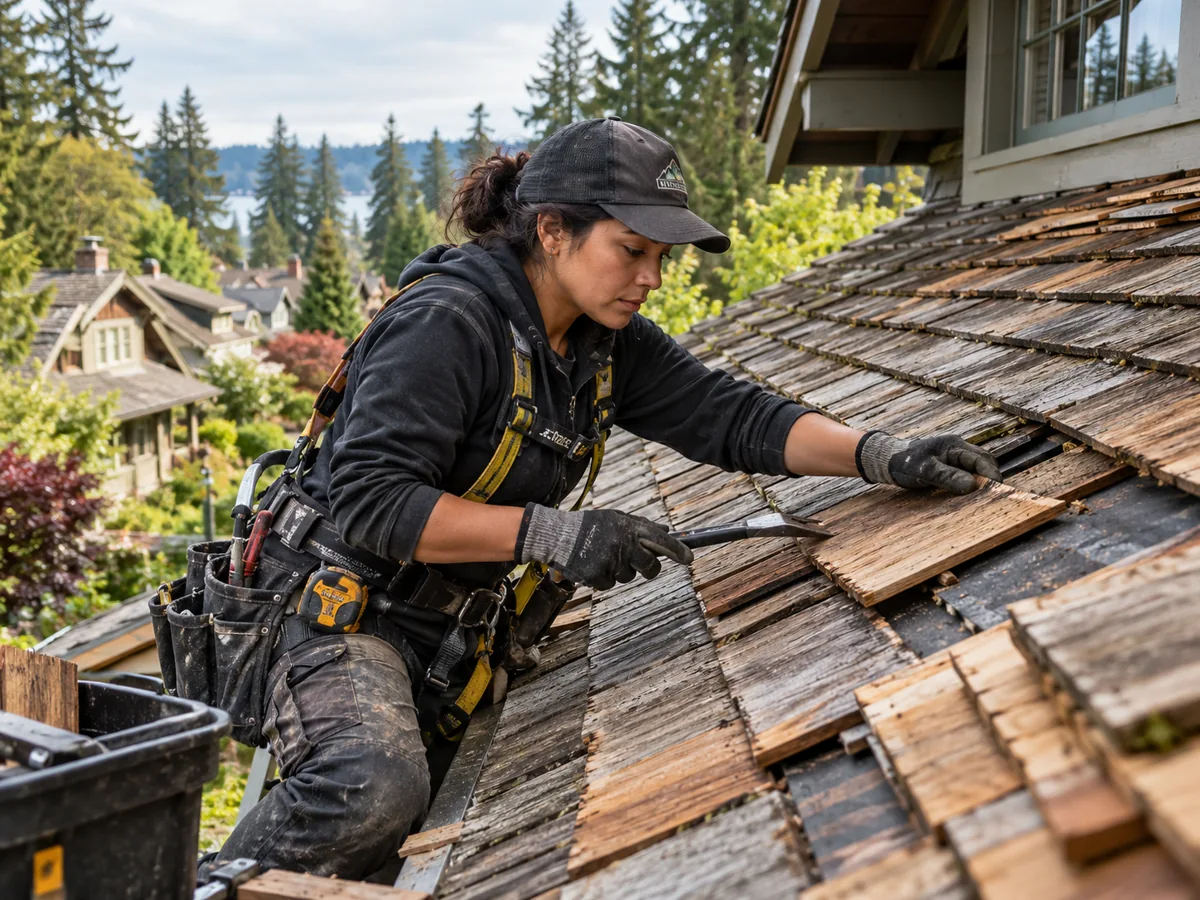
Female roofer carefully repairing cedar roofing on a residential house
02 / 16

Roofing Services Near Me for Gainesville Homes and Businesses

Different roofing problems require different approaches. A localized leak may need flashing work, while extensive material failure can require a more complete solution.

Explore the roofing services relevant to your property and the condition of your roof.

Browse services

Roof Repair in Gainesville

Roof repairs address specific defects when the surrounding roofing system remains serviceable.

Common examples include damaged shingles, displaced tiles, failed flashing, leaking pipe penetrations, and localized membrane damage.

An effective repair should address the source of the problem rather than simply cover the visible symptom.

The condition of nearby materials also matters. Repairing one failed component may be practical on a sound roof, but patching a broadly deteriorated roof may only delay further problems.

Roof Repair Services ↗

Roof Replacement in Gainesville

Roof replacement may be appropriate when roofing materials have deteriorated across large areas, recurring leaks persist after suitable repairs, or damage extends into important parts of the roofing system.

Replacement planning involves more than selecting new shingles or panels.

The roof deck, underlayment, flashing, ventilation, drainage, and compatibility of the chosen materials all deserve attention.

A replacement should be considered based on actual condition and long-term needs, not roof age alone.

Roof Replacement Services ↗

New Roof Installation

A new roofing installation involves multiple components working together to move water away from the building.

Depending on the roof design, these may include sheathing, underlayment, water barriers, flashing, roof coverings, ventilation components, and finished roof edges.

Material selection must account for the building structure, roof slope, weather exposure, and applicable requirements.

Correct installation details are particularly important around roof penetrations, valleys, walls, and transitions between materials.

Roof Installation Services ↗

Emergency Roof Repair

Active leaks, storm-displaced roofing materials, and falling debris can create urgent concerns.

The first priority is safety. Water entering near electrical fixtures, visibly sagging roof areas, and storm-damaged structures should not be approached casually.

Temporary roof protection may help reduce further water entry while permanent repairs are assessed and arranged.

Availability and response times should be confirmed directly with the roofing provider.

Emergency Roofing Services ↗

Residential Roofing

Residential roofing protects living spaces while contributing to the home's appearance, water management, and overall performance.

Asphalt shingles, tile, and metal systems each have different installation requirements, maintenance needs, and design considerations.

Roof valleys, plumbing vents, chimneys, skylights, and transitions between roof sections require particular attention because these are common areas where water-management details matter.

Residential Roofing ↗

Commercial Roofing

Commercial and low-slope roofs have different demands from conventional sloped residential roofs.

Systems such as TPO and modified bitumen rely on appropriately detailed seams, penetrations, edges, and drainage arrangements.

Rooftop equipment, parapet walls, drains, and scuppers can make maintenance and leak investigation more complex.

Commercial roofing decisions should account for system condition, building use, access, and disruption during work.

Commercial Roofing ↗

Storm Damage Roof Repair

Strong winds may lift shingles, displace ridge materials, or loosen roof components. Wind-driven rain may enter through existing weak points.

Visible damage is useful evidence, but it may not show the complete condition of the roof.

An assessment can help distinguish storm-related damage from gradual aging and identify whether localized repair or more extensive work should be considered.

For potential insurance claims, document visible damage safely and review the actual terms of your policy.

Storm Damage Roof Repair ↗

Roof Inspections

A roof inspection helps identify visible defects, evaluate general condition, and clarify potential maintenance, repair, or replacement needs.

Typical inspection subjects include the roof covering, flashing, penetrations, drainage, edges, valleys, and accessible underlying areas.

Some defects are hidden beneath roofing materials, so a visual inspection has limitations.

The most useful outcome is a clear understanding of what was observed, what remains uncertain, and what should happen next.

Roof Inspection Services ↗

03 / 16

Roof Repair Near Me in Gainesville — Finding the Source of a Leak

A common roofing mistake is assuming that water enters directly above the place where it appears inside.

Roof leaks do not always work that way.

Water may enter near a roof penetration, travel along the underside of the roof deck, and eventually drip onto a ceiling several feet away.

This is why fixing the area immediately above a stain may not solve the problem.

Roof Flashing Problems

Flashing helps protect roof joints, walls, chimneys, skylights, and other transitions.

It directs water away from locations where different building components meet.

When flashing becomes damaged, separates from adjacent materials, or was installed incorrectly, water may find a path beneath the roof covering.

The appropriate repair depends on the flashing system, surrounding materials, and extent of deterioration.

Damaged or Missing Shingles

Asphalt shingles can become damaged through aging, weather exposure, wind, or impact.

A missing shingle may expose underlying materials. However, the condition of the surrounding shingles determines whether an isolated repair is likely to be durable.

Brittle, cracked, or widely deteriorated shingles can make a small repair less practical.

Pipe Boots and Roof Penetrations

Plumbing vents and other roof penetrations require details that prevent water from passing through openings.

Pipe boots may crack or deteriorate while nearby shingles remain in good condition.

Replacing a failed component can sometimes resolve a leak without major roofing work, provided the adjacent system remains sound.

Roof Valleys and Water Concentration

A valley forms where two sloping roof sections meet.

These areas receive concentrated runoff, making correct material installation and water management especially important.

Problems may arise from damaged valley materials, debris buildup, or defective flashing details.

Low-Slope Roof Leaks

On low-slope roofing systems, defects may develop around membrane seams, drains, equipment penetrations, and perimeter details.

Standing water can make some problems worse, although the presence of water alone does not establish the exact cause.

A useful assessment considers both membrane condition and drainage performance.

The key principle: A lasting roof repair must address the identified defect with materials and methods compatible with the existing roofing system.

Learn When Roof Repair Is Enough • +1 (855) 923-5342

04 / 16

Roof Replacement Near Me in Gainesville — When Repairs Aren't Enough

A roof does not automatically need replacement because it has reached a certain age.

Some older roofs remain serviceable. Other roofing systems develop widespread problems much earlier because of installation defects, material conditions, environmental exposure, or unresolved water damage.

Replacement becomes a more serious consideration when the roof can no longer provide reliable protection through reasonable repairs.

Common Signs That Replacement Deserves Consideration

  • Roofing materials show widespread deterioration.
  • Several roof areas experience recurring leaks.
  • Repairs repeatedly fail to resolve problems.
  • Large areas of shingles are brittle, cracked, or losing protective granules.
  • The roof has significant underlying moisture damage.
  • Existing materials are unsuitable for reliable repair.
  • The roof system requires substantial work across multiple components.

An evaluation should consider the roof covering, flashing, roof deck, ventilation, and water-management details.

What Happens During Roof Replacement?

A typical full replacement may involve:

  1. Preparing the work area and protecting surrounding property.
  2. Removing the existing roof covering.
  3. Evaluating exposed decking and correcting identified problems.
  4. Installing appropriate underlayment and water-control components.
  5. Integrating flashing at roof edges, penetrations, valleys, and walls.
  6. Installing the selected roof covering.
  7. Completing ridge, ventilation, perimeter, and finishing details.
  8. Checking the completed work and cleaning the work area.

The exact sequence varies by material, roof design, and project requirements.

Replacement provides an opportunity to address defects that may not be visible while the old covering remains in place.

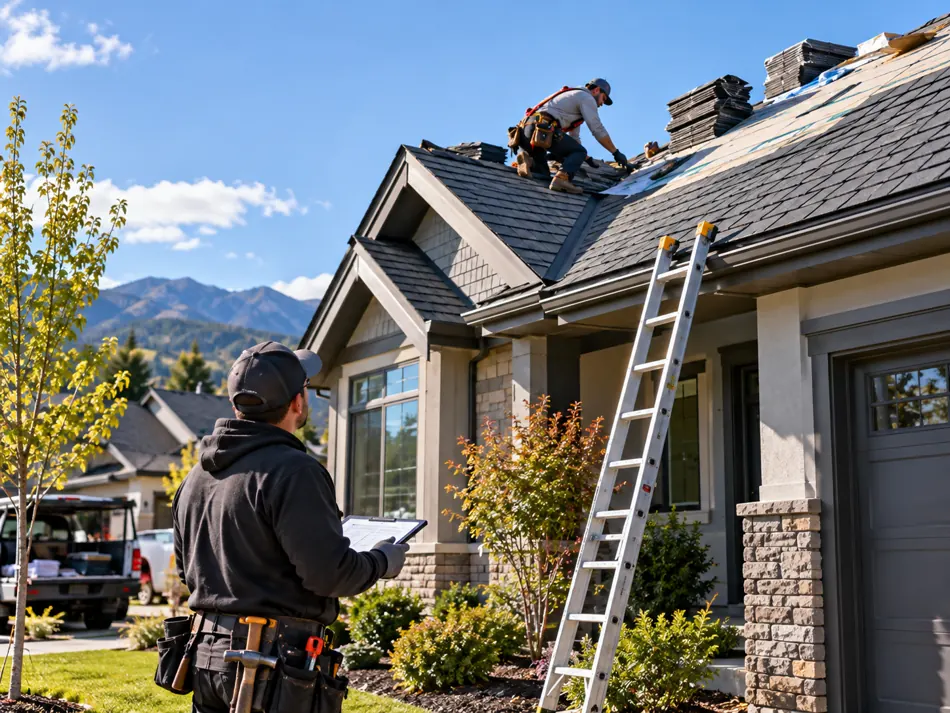
Roofing crew working on a residential roof
05 / 16

Roof Repair or Replacement — Which Option Makes More Sense?

The right choice depends on the extent of damage, the condition of surrounding materials, and whether the underlying problem can be corrected reliably.

Roof condition Practical consideration
One damaged pipe boot, otherwise sound roof Localized repair may be appropriate.
Several missing shingles after wind Repair may work if adjacent materials remain serviceable.
Repeated leaks in several areas Evaluate for broader deterioration and possible replacement.
Widespread brittle or damaged shingles Replacement may be more practical than repeated repairs.
One isolated flashing defect Targeted flashing repair may solve the problem.
Significant damage to multiple deck areas More extensive repair or replacement may be necessary.
Older roof with no major problems Age alone does not require immediate replacement.

Questions Worth Asking Before Deciding

How extensive is the damage? Are failures occurring in one area or across multiple slopes? Can the defect be repaired with compatible materials? What is the condition of the existing roof deck? Are repeated repair costs becoming unreasonable?

A repair should not be recommended simply because it is cheaper today. Equally, a complete replacement should not be recommended when a suitable localized repair can address the problem.

Repair or Replacement? Call +1 (855) 923-5342

06 / 16

Roofing Materials for Gainesville Homes and Businesses

Roofing material selection affects appearance, maintenance, installation requirements, weight, and performance.

No single material is ideal for every property.

The roof slope, structural capacity, existing building design, and local exposure should guide the decision.

Roofing material Common applications Advantages What to consider
Architectural asphalt shingles Sloped residential roofs Broad style selection, practical repairs, generally lower initial cost Weathering, granule loss, slope limitations
Clay tile Mediterranean and Spanish-style roofs Durable covering, distinctive appearance Structural weight, underlayment condition, breakage
Concrete tile Sloped residential roofs Strong material, varied appearances Weight, roof design, long-term maintenance
Standing-seam metal Suitable residential and commercial roofs Durable panels, concealed fastener designs, reflective options Higher initial cost, expansion details, specialized installation
TPO membrane Low-slope commercial roofs Heat-welded seams, reflective product options Installation quality, punctures, drainage
Modified bitumen Appropriate low-slope roofs Multi-layer system options, good suitability for many detailed roof areas Seam details, installation method, surface protection

Asphalt Shingle Roofing

Asphalt shingles are common on sloped residential roofs because they offer a balance of appearance, availability, and installation cost.

Architectural shingles provide dimensional profiles and are available in many colors.

Their performance depends on the roof slope, fastening, ventilation, flashing, and exposure conditions.

Tile Roofing

Clay and concrete tile can be suitable for properties designed to carry their weight.

A tile roof includes important waterproofing components beneath the visible tiles.

Tiles may remain usable while underlayment and other hidden components require attention.

This distinction matters when evaluating an older tile roof.

Emergency Roofing

Metal roofing offers a different combination of appearance, durability, and maintenance requirements.

Standing-seam systems use formed panels with specially designed seams and flashing details.

Roof penetrations, thermal movement, roof slope, and corrosion considerations should be addressed during planning.

Low-Slope Roofing

Low-slope systems rely on membrane detailing and carefully managed drainage.

Material choice depends on building use, existing roof construction, roof traffic, insulation, and the conditions around rooftop equipment.

An unsuitable membrane or poorly designed drainage detail can create problems even when the surface material appears intact.

07 / 16

Roofing in Gainesville, TX — Local Conditions That Matter

Gainesville's position in the South Bay creates roofing considerations involving seasonal rain, coastal exposure, sunshine, and occasional strong winds.

Different properties experience these conditions differently. Roof design, location, existing materials, and maintenance all influence performance.

Winter Rain and Roof Drainage

Southern California receives much of its rainfall during the cooler part of the year.

A roof may appear trouble-free through long dry periods, only to reveal a defect during sustained rain.

Flashing joints, roof valleys, drains, and gutter systems deserve attention before rainy weather.

Homes with low-slope roof sections require particular care because drainage behavior differs from that of steeply pitched roofs.

Coastal Moisture and Metal Components

Properties closer to the coast can experience marine moisture and airborne salts.

These conditions may influence corrosion risks for exposed emergency roofing components.

Suitable materials and compatible fasteners matter, particularly around roof edges, flashing, and penetrations.

Corrosion risk depends on exposure, product selection, and the building's specific location.

Wind Exposure

Strong wind events can lift poorly secured materials or damage vulnerable roof edges.

Roof coverings, ridge components, fastening details, and perimeter construction all contribute to wind resistance.

After unusually strong winds, homeowners can check safely from the ground for displaced roofing materials and visible damage.

Sunshine and Material Weathering

Long-term sunlight and heat exposure affect many roofing materials.

Roof coverings, exposed seals, and some penetration components can deteriorate as they age.

Material selection, installation quality, and appropriate ventilation all deserve consideration.

Roof Replacement, Permits, and Energy Requirements

Roof replacement projects may involve municipal permits and applicable California building and energy requirements.

California's current energy rules can affect certain roofing projects, depending on the building type, roof slope, materials, and scope of work.

Property owners should confirm applicable requirements with the City of Gainesville and the qualified professional responsible for the project.

Local Roof Design Considerations

Gainesville includes homes with varied roof shapes and materials, alongside commercial and industrial buildings using different low-slope systems.

A steep shingle roof, tile roof, and commercial membrane roof should not be evaluated or repaired as though they were interchangeable.

The existing roof design should guide the assessment.

See What a Roof Inspection Covers • +1 (855) 923-5342
08 / 16

What a Roof Inspection Should Cover

A useful roof assessment looks beyond whether the visible covering appears worn.

The goal is to evaluate key water-management details and identify signs of defects or deterioration.

Roof Inspection Checklist

  • Condition of shingles, tile, metal panels, or membrane
  • Roof valleys and areas where water concentrates
  • Flashing at chimneys, walls, and skylights
  • Plumbing vent boots and other roof penetrations
  • Roof edges, drip edge, and perimeter details
  • Visible cracks, lifted materials, or exposed fasteners
  • Drainage and gutter conditions
  • Evidence of previous roofing repairs
  • Signs of moisture in accessible attic areas
  • Visible decking concerns
  • Ventilation components where applicable
  • Potential storm-related damage

Some roofing problems remain concealed beneath the roof covering.

A visual inspection does not necessarily establish the condition of underlayment, hidden framing, or all portions of the deck.

Findings should be explained with appropriate limitations and recommendations.

09 / 16

Emergency Roof Leaks — What to Do Before Help Arrives

A roof leak can create immediate concerns when water reaches ceilings, insulation, electrical components, or occupied rooms.

The first step is protecting people.

Safe Steps for Homeowners

  1. Avoid unsafe areas. Stay away from sagging ceilings, fallen debris, and areas affected by structural damage.
  2. Watch for electricity. If water is near electrical fixtures or wiring, keep clear and seek qualified help.
  3. Move belongings if safe. Protect furniture and electronics without entering dangerous areas.
  4. Contain minor dripping water. Use containers only where it is safe to do so.
  5. Take photographs from a safe location. Record visible damage and the conditions when it appeared.
  6. Contact a roofing professional. Explain what happened, where water is entering, and whether the leak is active.
  7. Ask about temporary protection. A qualified provider can determine whether temporary weatherproofing is appropriate.

Do not climb onto a wet or damaged roof.

Temporary protection may limit further damage, but it does not replace diagnosis and permanent repair.

10 / 16

What to Expect When Planning a Roofing Project

Understanding the usual steps can make roofing work easier to evaluate.

1. Explain the Roofing Concern

Describe visible damage, the location of leaks, previous repairs, and any known roofing history.

Photographs taken safely from the ground may help explain the problem.

2. Arrange an Appropriate Assessment

A qualified roofing provider may need to examine the roofing materials, flashing, drainage, and accessible supporting components.

The extent of the evaluation depends on the reported problem and site conditions.

3. Review the Findings

Ask what caused the problem, what evidence supports that conclusion, and whether more than one solution is available.

For a repairable roof, the scope should identify the area and materials involved.

For replacement, the explanation should identify why a larger project is appropriate.

4. Compare the Written Scope

A useful roofing proposal should describe the work, relevant materials, pricing, anticipated timing, and any important exclusions or contingencies.

Unforeseen decking repairs, permit responsibilities, disposal, and cleanup should be discussed when applicable.

5. Complete the Roofing Work

The actual process depends on the roof type and project.

Repairs may involve a limited work area. Replacement projects may involve tear-off, deck work, underlayment, flashing, and roof-covering installation.

6. Review Completion Details

Before closing out the project, clarify what work was completed, what documentation is provided, and any relevant maintenance or warranty information.

Review Roofing Cost Factors • +1 (855) 923-5342

11 / 16

Roof Maintenance — Small Problems Are Easier to Address Early

Roof maintenance cannot prevent every leak or material failure, but it can help identify problems before they spread.

The most useful routine is based on the roof's condition, accessibility, material, and weather exposure.

Before the Rainy Season

Look safely from the ground for missing materials, damaged edges, and visible drainage concerns.

Arrange professional attention for problems that cannot be safely evaluated.

After Strong Wind or Rain

Check for displaced shingles, damaged tile, new ceiling stains, or water collecting where it normally drains.

Do not access a wet roof.

During Dry Weather

Review visible sealant deterioration, roof-edge concerns, and planned repairs where appropriate.

Dry periods may also provide better conditions for scheduling larger roofing projects.

For Commercial Buildings

Maintenance planning should account for drains, rooftop equipment, membrane details, and areas subject to regular roof traffic.

Commercial roof maintenance may require a different schedule and inspection approach from residential roofing.

12 / 16

How to Choose a Roofing Contractor Near Me in Gainesville

Choosing a roofing company involves more than comparing the final price.

The quality of a proposal, the contractor's qualifications, and the scope of the recommended work all matter.

Verify Licensing and Insurance

California generally requires a valid contractor license when the work requires a permit, uses employee labor, or meets the applicable contract-value threshold.

Roofing contractors commonly operate under the appropriate CSLB classification.

Consumers can verify a contractor through the California Contractors State License Board.

Ask about applicable insurance and confirm the documentation.

Compare Roofing Proposals Carefully

A useful proposal should identify:

  • Roofing materials
  • Work areas
  • Repair or replacement scope
  • Tear-off requirements
  • Flashing details
  • Deck repair contingencies
  • Permit responsibilities
  • Cleanup
  • Project scheduling
  • Payment terms
  • Applicable warranty provisions

Two proposals may have significantly different prices because they include different amounts of work.

Ask How Unexpected Damage Is Handled

Some decking or underlayment problems only become visible after materials are removed.

Clarify how additional repairs would be approved and priced.

This can reduce confusion during a replacement project.

Understand the Warranty

Manufacturer warranties and workmanship warranties are not the same.

Manufacturer coverage generally concerns eligible product defects under stated conditions.

Workmanship coverage, where provided, concerns specified installation-related issues.

Ask what is covered, what is excluded, who provides the warranty, and what documentation applies.

Explore Roofing Options in Gainesville • +1 (855) 923-5342

13 / 16

What Affects Roof Repair and Replacement Costs in Gainesville?

Roofing costs depend on the building and the work needed.

A small repair around one roof penetration is very different from replacing a complex roof with deteriorated decking and multiple existing layers.

Important Roofing Cost Factors

Roof size: Larger areas generally require more materials and labor.

Roof pitch and shape: Steep slopes, valleys, dormers, and complex transitions can increase installation difficulty.

Roofing material: Shingles, tile, metal, and membrane systems have different material and installation costs.

Existing roof condition: Damaged decking or widespread deterioration can expand the scope.

Tear-off requirements: Removing existing materials adds labor and disposal considerations.

Flashing and penetrations: Chimneys, skylights, walls, and rooftop equipment require careful detailing.

Building accessibility: Height, property access, and staging limitations affect the work.

Permits and related requirements: Applicable approvals and code-related work may affect project costs.

Drainage and ventilation: Necessary system corrections should be considered as part of the overall scope.

Why Similar-Sized Roofs Can Cost Different Amounts

Two houses may have nearly identical roof areas yet require very different work.

One may have sound decking and a simple roof shape. Another may contain multiple penetrations, several existing roof layers, damaged wood, and difficult access.

The most useful estimate explains the proposed work rather than presenting only a total.

Discuss Your Roofing Project • +1 (855) 923-5342

14 / 16

Roofing Services Across Gainesville and the South Bay

Gainesville is the primary geographic focus of this roofing homepage.

Nearby communities in the South Bay include Redondo Beach, Hermosa Beach, Manhattan Beach, Lomita, Gardena, Carson, Lawndale, Hawthorne, and parts of the Palos Verdes Peninsula.

Within Gainesville, homeowners may recognize areas such as Old Gainesville, Southwood, Walteria, North Gainesville, and Hollywood Riviera.

Roofing needs vary from one property to another, including the roof covering, slope, drainage arrangement, and condition of existing materials.

15 / 16

Frequently Asked Questions About Roofing in Gainesville, TX

How do I know if my roof needs repair or replacement?

Localized problems may be repairable when nearby roofing materials remain sound. Replacement may make more sense when deterioration affects multiple areas or repeated repairs no longer provide reliable protection. The decision should consider the covering, flashing, deck condition, and overall roof system.

Can a leaking roof be repaired without replacing the entire roof?

Yes, some leaks can be corrected through targeted repairs. Examples include certain failed flashing details, damaged pipe boots, or limited roof-covering defects. A suitable repair depends on locating the source and confirming that the surrounding roof remains serviceable.

What causes roof leaks when shingles look fine?

Leaks can originate at pipe penetrations, flashing, skylights, roof-to-wall transitions, or other joints. Water may also travel along hidden surfaces before appearing indoors. Intact shingles do not rule out a defect elsewhere in the roofing system.

How much does roof replacement cost in Gainesville?

Cost depends on roof size, pitch, materials, existing layers, decking condition, flashing, access, and project requirements. An estimate based on the actual roof is more useful than a generic citywide price.

How long does roof replacement take?

The on-site work may take a few days for some residential projects, while larger or more complex roofs require longer. Material availability, weather, repairs, and inspection scheduling can affect the total timeline.

What roofing materials are suitable for Gainesville homes?

Asphalt shingles, tile, and metal may be suitable depending on roof slope, building structure, architectural design, and applicable requirements. Low-slope sections generally require systems specifically designed for their drainage conditions.

What are the signs of a failing roof?

Possible signs include repeated leaks, widespread damaged shingles, cracked tiles, deteriorated flashing, roof sagging, moisture-related deck damage, and defects appearing in multiple areas. Each sign requires evaluation in context.

Should my roof be inspected after strong winds?

An inspection may be appropriate when strong winds cause visible damage, debris impact, displaced materials, or new leaks. Homeowners can observe safely from the ground but should not climb onto damaged roofing.

Does homeowners insurance cover roof damage?

Coverage depends on the policy, cause of loss, exclusions, deductible, and insurer's decision. Sudden covered events may be treated differently from gradual deterioration. A roofing provider may document damage, but the insurance company determines coverage.

What is the difference between roof repair and roof maintenance?

Roof repair addresses identified defects or damage. Maintenance focuses on observing roof condition, managing drainage concerns, and addressing developing issues when appropriate. Both may be part of caring for an existing roof.

Are tile roofs completely waterproof?

The visible tile covering sheds water, but the underlying roofing assembly also plays an important role in water protection. A tile roof can develop leaks when underlayment, flashing, or other components deteriorate, even if many tiles remain intact.

Why is roof flashing important?

Flashing directs water away from joints, penetrations, and roof transitions. Damaged or poorly installed flashing can allow water beneath otherwise serviceable roof coverings.

What should I ask before hiring a roofing contractor?

Ask about applicable licensing, insurance, the work scope, material choices, permits, repair alternatives, unexpected damage, warranty terms, cleanup, and payment conditions. Review the written proposal carefully.

Is a more expensive roof always better?

Not necessarily. Material suitability, installation quality, roof design, flashing details, and maintenance all influence performance. A higher-priced material does not compensate for an unsuitable roofing system or poor installation.

16 / 16

Discuss Your Roofing Needs in Gainesville, TX

Whether the concern is a roof leak, storm damage, aging materials, or a planned replacement, the first step is understanding the roof's condition and the options available.

From localized repairs to larger roofing projects, clear explanations and an appropriate scope of work make it easier to choose the next step.

Speak With a Roofing Professional • +1 (855) 923-5342

LOCAL ROOFING COVERAGE

Roofing in Gainesville, TX — Neighborhoods, ZIP Codes & Map

Explore local neighborhoods, postal areas and nearby cities for Gainesville. Coverage and availability may vary by provider.

Neighborhoods in Gainesville

CookCuster CityWoodbineWalnut BendBurns CityShady Grove

ZIP codes for Gainesville

76240

Nearby roofing service areas

☎ Call +1 (855) 923-5342
Call +1 (855) 923-5342